When customers already juggle dozens of logins and portals, adoption of the next digital tool often depends on perceived effort as much as real utility - and on whether security steps feel proportionate to the task.
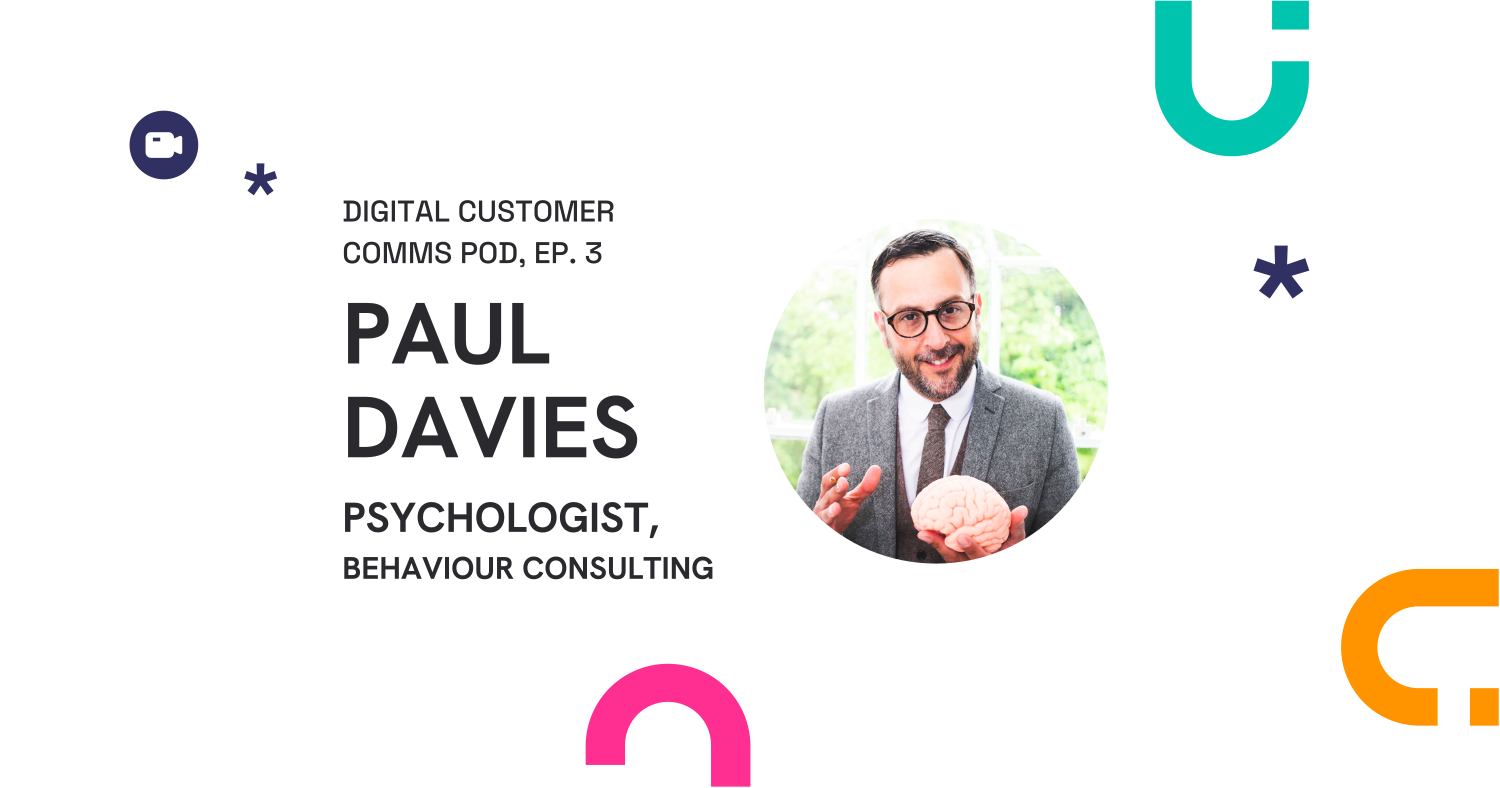
Paul Davies, Consulting Psychologist at Behaviour Consulting, works with organisations on behavioural psychology in customer-facing digital journeys. Episode 3 of Regulated Digital explores how firms can improve engagement without adding unnecessary friction.
Paul Davies applies behavioural psychology principles to help companies understand how customers perceive usefulness, effort, and security in digital channels. The article focuses on adoption models, staged messaging, personalisation, and contextual authentication in regulated customer communications.
You can subscribe to Regulated Digital on your podcasting platform of choice using the links on our Spotify page. You can also watch the video on YouTube, or listen on Apple Podcasts.
Created from episode transcript
When Perceived Effort Blocks Adoption
Customers often resist new digital tools when they already feel they have too many logins and accounts to manage.
The Technology Acceptance Model (TAM) is a useful starting point. It highlights two factors that shape adoption: perceived usefulness and perceived ease of use.
Users are more likely to try a new channel when they believe it will help them and will not take disproportionate effort to use.
For product and communications teams, perception of usefulness and ease can matter as much as the underlying capability.
Perception of ease of use is as important for engagement as actual utility.
The perceived effort required to engage with a platform shapes whether people start, finish, or abandon a journey.
Even capable systems struggle when they feel cumbersome at first contact.
“It’s not just the reality of how useful or easy it is to use; it’s the perception that matters too. If people think it’s going to be useful and easy, they’re far more likely to engage.”
Paul Davies, Consulting Psychologist, Behaviour Consulting
That perception gap shows up in everyday product choices as well as in regulated service design.
Why Ease Of Use Changes Adoption In Customer Journeys
Ease of use is about the whole journey feeling straightforward, not only removing one friction point.
In financial services, payment habits moved from cheques to cards to contactless and virtual wallets. Each step met resistance until customers perceived the new option as easier than the old habit.
Simple Messaging Can Outweigh Technical Superiority
The 2001 iPod launch is a familiar example: adoption grew when Apple made the offer easy to grasp, not when it won on audio quality alone.
The line “a thousand songs in your pocket” spoke to convenience and low effort, which helped overcome early scepticism.
Regulated firms face a similar design question today: can the customer understand the next step quickly, complete it once, and see why the channel is worth using again?
Match The Message To The Customer's Decision Stage
The transtheoretical model of behaviour change describes stages from pre-contemplation through action and maintenance.
What Staged Messaging Changes
Tailoring the right message to the right stage increases engagement more than repeating the same call to action regardless of readiness.
Teams that know which stage a customer is in can choose whether to educate, nudge, or ask for action.
A direct call to action while someone is still in contemplation can cause disengagement.
Customers in contemplation may need educational content; those in preparation may be ready for a clearer next step.
“Understanding where a customer is in their decision-making journey allows organisations to present the right message at the right time, improving the chances of engagement.”
Paul Davies, Behaviour Consulting
Once timing and readiness are clearer, personalisation can reduce effort rather than add another decision layer.
Personalisation That Reduces Cognitive Load
Personalisation can raise engagement when it makes the next step obvious, not when it adds more decisions.
Consumers are more likely to purchase when offered a personalised experience, but the operational test is whether prompts arrive when the customer is ready to act.
What Personalisation Needs Behind the Scenes
Personalisation that boosts conversion still depends on accurate, timely data and messages that reduce cognitive load at the moment of decision.
That can mean tailored recommendations, channel preference, or messaging based on prior interactions.
Many organisations still struggle to gather and apply the data needed to keep those prompts relevant and timely.
“Placing hot triggers in the paths of motivated people is one of the most effective ways to engage customers. If you can deliver a clear call to action at the right moment, you reduce the effort required, making it easier for them to respond.”
Paul Davies, Behaviour Consulting
Security Controls Without Unnecessary Friction
Engaging experiences still need proportionate security, especially where firms handle sensitive customer data.
The risk is security mechanics that feel heavier than the task warrants, such as repeated logins or blanket authentication for low-risk steps.
Sending Important Documents At Scale?
Learn how Mailock Automated helps organisations protect high-volume customer communications without forcing every recipient through a portal.
Contextual authentication adjusts controls to sensitivity: accepting terms may need lighter checks than moving money or sharing identity documents.
Customers notice when every touchpoint asks for the same effort, even when the underlying risk differs.
Design teams can use approaches described in balancing security and usability to keep protection credible without blocking completion.
For organisations that keep email as the main route for sensitive documents, recipient authentication and clear access steps can add safeguards without pushing every customer through a separate portal habit.
"Customers judge a secure channel by whether they can finish the task in one sitting. If authentication feels heavier than the message itself, they look for another route - even when the underlying control is strong."
Paul Holland, Founder and CEO, Beyond Encryption (Mailock)
Behavioural insight, useful frameworks, and proportionate security design together help firms reduce abandonment, time support calls, and keep digital channels workable at scale.
FAQs
What Is the Technology Acceptance Model?
TAM explains technology adoption through perceived usefulness and perceived ease of use. Customers are more likely to engage when they expect a clear benefit and low effort.
Why Does Perceived Ease of Use Matter as Much as Features?
People often decide before they experience full functionality. If a tool looks difficult, they may never start, even when the capability would help them.
How Does the Transtheoretical Model Apply to Customer Communications?
It helps teams match content to readiness: education for contemplation, clearer next steps for preparation, and stronger calls to action when customers are ready to act.
What Are Hot Triggers in Behavioural Engagement?
They are timely prompts placed where motivated customers can act quickly, reducing the effort needed to respond at the right moment.
How Can Firms Balance Security and Engagement?
Use contextual authentication so controls fit the risk of the task, and avoid asking for the same login or verification burden on low-sensitivity steps.
Sam Kendall works on digital marketing at Beyond Encryption, helping build B2B marketing activity around research, first principles, and sustainable growth. He writes about marketing effectiveness, positioning, customer communications, and digital culture, with longer-form work published at ATNL.net.
 Sam Kendall


.svg)
 Previous post