A mortgage shapes a monthly payment and how much room people feel they have to act.
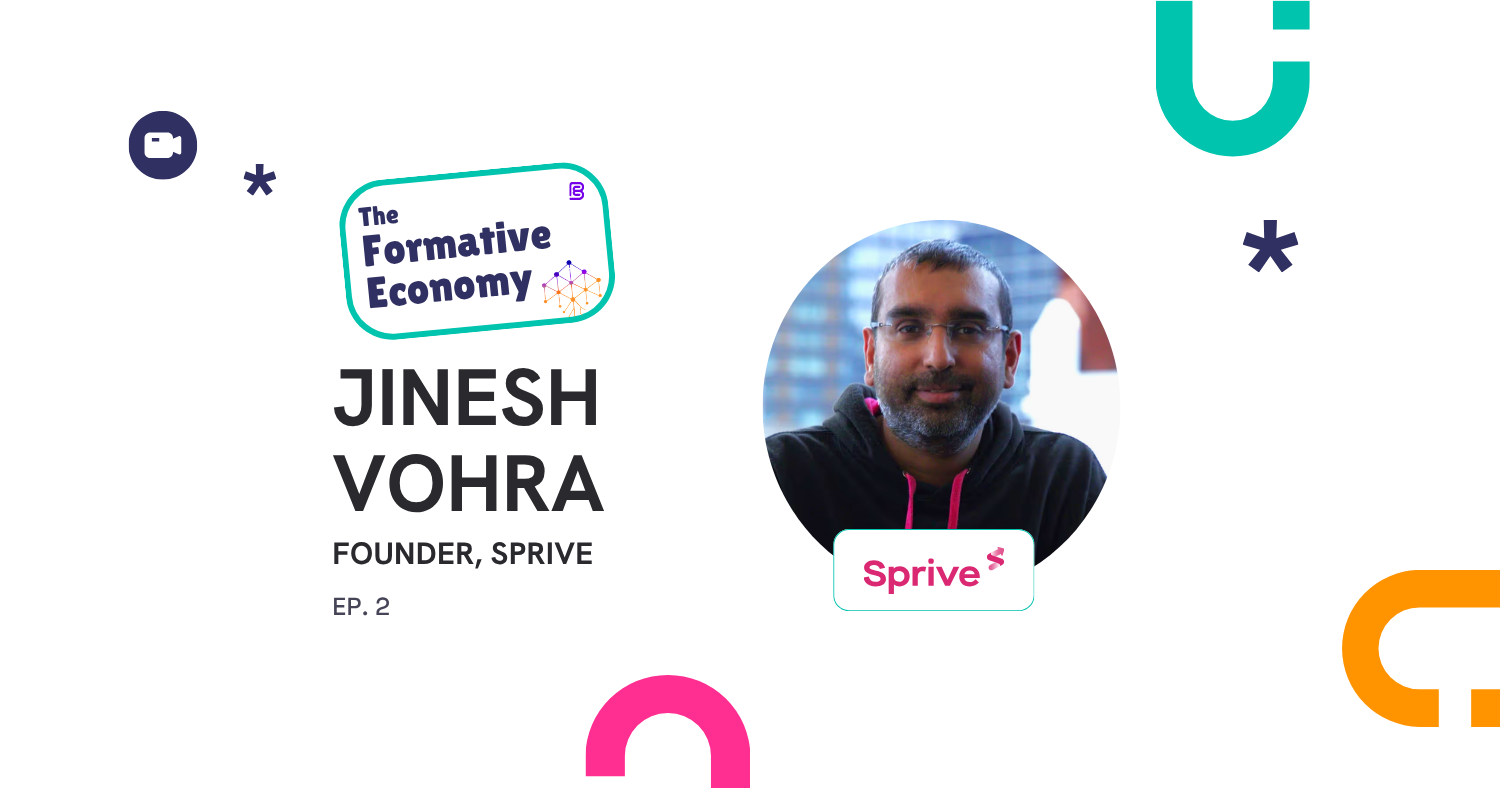
On this episode of The Formative Economy, Jinesh Vohra, CEO & Founder of Sprive, discusses what long-term debt does to people emotionally, why homeowners need more control after the mortgage is signed, and how better money education could shape decisions far earlier in life.
A mortgage can look like a monthly budgeting question on the surface.
In practice, it can shape confidence, risk appetite, and optionality for years. The impact runs wider than rates and repayments alone.
Long-term mortgage debt shapes behaviour, the friction people face when trying to make progress, and what a more liveable mortgage market could look like.
Why Mortgage Debt Feels Bigger Than The Monthly Payment
The Real Cost Is Not Always The One People Focus On
Jinesh’s story begins with a moment many homeowners recognise: the contrast between looking at a monthly payment to seeing the total lifetime cost of the loan.
Its longer-term impact turns a mortgage from a practical route into home ownership into a long, expensive obligation that can sit underneath every other adult decision around money and lifestyle.
In a market where mortgage terms have stretched, this is especially impactful at the societal level.
UK Finance data shows the average first-time buyer term rose from just under 29 years at the start of 2022 to over 31 years by the end of that year, with much of the shift driven by growth in 40-year borrowing.
Longer terms can help with short-term affordability, but they also lengthen the emotional horizon of debt - the monthly payment may feel more manageable, while the burden lasts longer and the total interest cost is higher.
Debt Changes Optionality
Paying down mortgage debt can change what people believe they can do next at work, at home, and in business.
"Without the mortgage I'm now taking bigger risks."
Jinesh's personal story points to something deeper about the goal of becoming mortgage free: when the largest fixed obligation drops away, work, family, and business decisions can start to look different.
Debt narrows optionality. It can make a stable job feel less like a choice and more like a requirement.
It can make experimentation feel reckless, even when the person involved has the skills, the ambition, and the ideas.
Behaviour Change Usually Starts With Less Friction
Most People Do Not Need More Lectures
Jinesh makes a useful distinction between motivation and friction.
In many cases, homeowners are not failing to overpay their mortgage simply due to a lack of discipline. The process also creates barriers by being awkward, unclear, and therefore easy to postpone.
That matters because mortgage overpayments are still not common knowledge. Many people do not fully understand what an overpayment does, when charges might apply, or how much earlier action matters compared with waiting until later in the term.
That is why tools that make good behaviour easier can be more powerful than tools that merely explain the maths.
Friction is a behavioural tax. The more steps, uncertainty, and guesswork a person faces, the more likely they are to do nothing.
Any product aimed at financial wellbeing needs to remove confusion, make progress visible, and turn abstract improvement into something people can repeat without constant effort.
Good Financial Products Fit Into Real Life
Sprive’s idea is simple: everyday spending can be turned into mortgage overpayments.
The behavioural design underneath matters as much as the cashback mechanism.
People rarely build new financial habits because they enjoy complexity. They build them when the action feels legible, low-friction, and worth repeating.
Jinesh's team is not asking people to become amateur mortgage analysts. They are trying to help them chip away at debt through routines they already have.
Products that improve financial outcomes often do best when they reduce the mental effort needed to act, rather than demanding a new identity from the user.
There's also a note of balance worth keeping. Mortgage overpayments can save interest and shorten the term, but they are not always the first or only answer.
Households still need to weigh them against higher-cost debt, emergency savings, pensions, and any overpayment limits in their deal.
In Consumer Fintech, Trust Is Part Of The Product
Trust Has To Be Earned Before Convenience Matters
The moment a product moves into the territory of a household’s mortgage, it's dealing with a high degree of trust.
People are not only asking whether the app works. They are asking whether it is credible enough to sit next to their biggest financial commitment.
That is why Jinesh says brand trust matters so much. Reviews, lender relationships, familiar names, national press, and friend-to-friend recommendation all help reduce the emotional leap required to try something new.
Borrowed Trust Still Matters
Sprive has grown in part through referrals and word of mouth, which makes sense in a category where the pain point is both personal and widely shared.
People may not volunteer the details of their salary or savings, but they will talk about mortgages when rates rise and repayments bite.
A recommendation from a friend, coverage in national media, or credibility borrowed from a platform like Dragon's Den can do something performance marketing often can't: it shrinks the due-diligence gap.
Sprive’s current site says it supports 14 of the UK’s largest lenders.
Consumers in sensitive financial categories tend to look for signs that other people have already crossed the trust barrier first.
"When a product sits beside a household's largest financial commitment, people need credible permissions, clear access, and controlled follow-up before convenience can earn their trust."
Paul Holland, Founder and CEO, Beyond Encryption (Mailock)
In personal finance, trust is part of the product.
A Better Mortgage Market Would Feel More Liveable
Digitisation Should Reduce Hassle For The Customer
Jinesh describes a mortgage system that still feels more manual than it should.
That points to market design, not paperwork alone.
Choosing The Right Customer Channel?
Read our research on portals, logins, email, and post before deciding how customers should receive important documents.
The regulator is looking at how to simplify parts of the framework to support sustainable home ownership, wider choice, easier remortgaging, and product innovation that better reflects how people actually live and earn.
That is not the same as saying all friction is pointless.
Mortgages are serious products, and scrutiny matters.
But scrutiny and clumsiness are not the same thing.
A better mortgage journey would still protect consumers while making comparison, switching, and overpayment easier to understand and easier to act on.
The Money Scripts Start Earlier Than Most Systems Admit
Children Learn Money Through Atmosphere As Much As Advice
Jinesh talks about growing up around hard work, careful spending, and a strong emphasis on education, then thinking consciously about what his own children will absorb.
Financial behaviour does not suddenly appear when someone signs a student loan agreement or starts comparing mortgage deals.
It is shaped much earlier by what adults normalise, explain, avoid, or quietly demonstrate.
The MaPS guidance says schools, parents, and carers all play a role in helping children develop money skills.
Its recent research also shows that many young people still lack structured financial education, and that confidence tends to weaken as topics move from saving and spending into debt, credit, and long-term planning.
Budgeting Is Only The Start
Financial education needs to go broader than budgeting tips alone.
Young people need to understand trade-offs, compounding, the difference between investing and gambling, how credit really works, and why apparently small decisions can echo for years.
They also need language for discussing money without shame.
That is why the policy conversation matters.
People make expensive decisions very young in life, often with far too little preparation.
Jinesh’s point is not that every child needs to become a finance expert.
It is that earlier understanding gives people a better chance of making choices that widen their future rather than narrowing it.
FAQs
Why Do Mortgage Overpayments Matter?
Because they reduce the balance earlier, which can cut future interest and shorten the mortgage term.
Is Overpaying a Mortgage Always the Best Use of Spare Cash?
No. It depends on your rate, other debts, emergency savings, pension position, and any limits or charges in your mortgage deal.
Why Is Trust So Important for Mortgage-Related Apps?
Because they sit close to a household’s biggest financial commitment and often rely on connected data, payment permissions, and long-term behaviour change.
What Is the Wider Takeaway from This Episode?
Mortgage freedom is about interest saved and about how much room people have to make decisions about work, family, and risk without debt dictating every move.
Emily, our marketing director, uncovers the human stories behind our products. With 18+ years in tech and SaaS marketing, she excels in content strategy, SEO, brand awareness, PR, events, and social media.
 Emily Plummer


.svg)
 Previous post