How do you build lasting relationships with an audience as broad as the UK population?
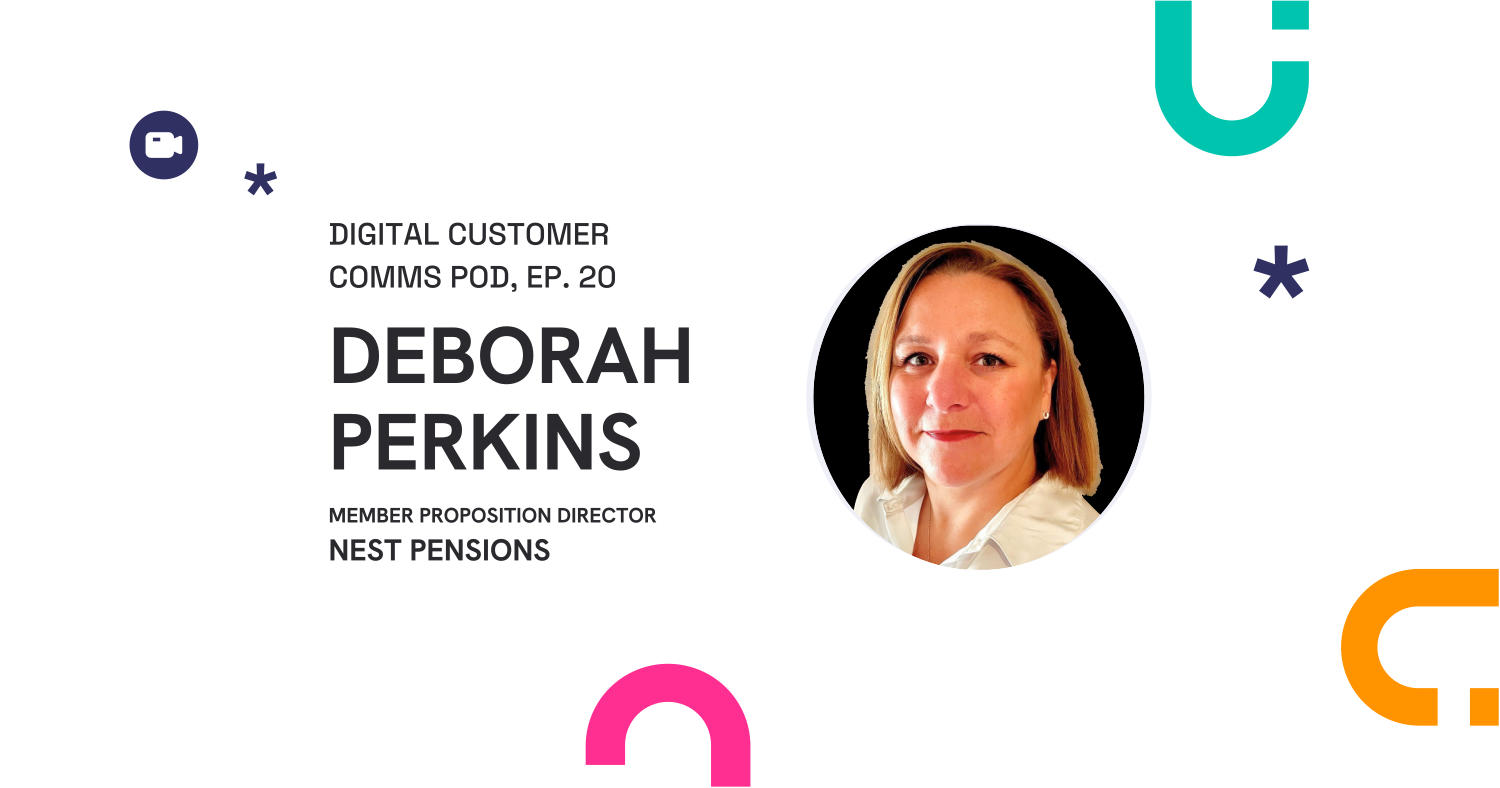
Deborah Perkins, Member Proposition Director at Nest Pensions, joined us to discuss how Nest navigates the unique challenges of engaging and supporting auto-enrolled pension scheme members.
Nest uses behavioural science, testing, and new digital platforms such as its app to personalise experiences for over 13 million members, many of whom have little initial interest in their pensions.
For a scheme serving more than 13 million members, the practical question is how to stay relevant without overwhelming people who rarely think about pensions. Perkins describes how Nest balances regulatory essentials, everyday operational messages, and personalised nudges supported by behavioural science and first-party data.
The Unique Communications Challenge of Pensions
Communicating with pension scheme members means playing the long game.
Nest's members typically join through their employers via auto-enrolment, not through a personal decision.
This creates an immediate arm's-length relationship, where building trust and engagement becomes even harder.
Adding to the difficulty, pensions as a product have traditionally low levels of engagement across the board.
Pensions are not like the current accounts that customers check daily.
Many people only interact with their pensions once a year when receiving their annual statement - if at all.
Another challenge is demographic: Nest serves a lot of low to moderate earners, many of whom may feel excluded from mainstream financial services or lack access to financial advice.
Over the long term, maintaining accurate data for millions of members as broad as the UK population is tough.
People move jobs, change addresses, or drop off communication channels, making it hard to keep them informed when it matters most. Wider industry work on pensions dashboards also raises the bar for how schemes keep member data accurate and useful over time.
Finding the Right Rhythm: How Often to Communicate
Frequency is a delicate balance at Nest.
Too little communication risks irrelevance, while too much feels like spam.
"We always start with hierarchy," Perkins explains, prioritising essential communications like regulatory updates first, then operational messages that help members manage their pensions day-to-day.
"We're very fortunate to have behavioural scientists who help us figure out when and how to nudge effectively."
Nest uses a test-and-learn model supported by behavioural experts to personalise timing and content wherever possible.
Overcoming Data Challenges
Data quality remains a huge hurdle, both for daily engagement and for critical life events like beneficiaries' details.
Nest often starts with employer-provided data, which can be incomplete or outdated from day one.
Even small errors, like misspelled names, can create big problems down the road.
Duplicate accounts are another frequent issue, as members accumulate multiple pensions from different jobs.
Despite these challenges, Nest uses a combination of first-party insights and third-party segmentation techniques to build a better understanding of its membership base.
How Nest’s New App Is Changing Member Engagement
Recognising the shift towards mobile-first behaviour, Nest launched its first app last year.
The app launch was a strategic play to gather better first-party data and meet members where they are comfortable, as well as improving convenience.
"We've found that new members are far more likely to engage and set up nominated beneficiaries via the app than the desktop portal."
App users are quicker to complete important actions like nominating beneficiaries, making the app an increasingly crucial channel for early engagement.
The app’s success is helping Nest refine what types of communications work best at different journey stages.
Why Mobile Matters More Than Ever
Nest's digital-first DNA made app development a natural step.
Timely, in-app nudges can be far more effective at prompting actions than traditional emails or phone calls.
This approach supports Nest’s goal of being relevant without overwhelming members with irrelevant messaging.
Measuring Success: Combining Quantitative and Qualitative Insights
When it comes to evaluating success, Nest doesn’t just rely on surface metrics like logins and clicks.
Every campaign or product update begins with clear hypotheses about the desired member behaviour changes.
Sending Important Documents At Scale?
Learn how Mailock Automated helps organisations protect high-volume customer communications without forcing every recipient through a portal.
From there, Nest tracks outcomes carefully, watching overall engagement rates and deeper indicators of impact on different customer segments, including vulnerable customers.
Inclusivity is baked into the evaluation process from the start, not added as an afterthought.
"Large pension schemes need member communication that feels relevant at the right moment, not only when regulators or annual statements force attention."
Paul Holland, Founder and CEO, Beyond Encryption (Mailock)
That discipline matters in pensions, where innovation has to sit inside strict regulatory responsibilities rather than outside them.
Building a Culture of Innovation in a Regulated Environment
Working in pensions means balancing innovation with strict regulatory responsibilities.
Risk management doesn’t mean avoiding change altogether - it means doing change well.
Nest’s strong internal culture supports a thoughtful, test-and-learn approach to new initiatives like the app and behavioural nudges.
Compliance teams aren’t seen as blockers, but as partners in building better member experiences.
The Role of AI and Technology in Nest’s Future
AI is on everyone's radar, but rushing in blindly carries real member-trust risks.
Nest is exploring ways AI could improve aspects like inclusivity checking, predictive insights, and better language accessibility.
Nest’s cautious approach rejects any uses that could risk member trust through misleading or superficial experiences.
There is still a lot of basic engagement work to be done before the future becomes fully AI-powered.
Advice for Financial Services on Improving Communications
Two practical principles stand out for firms trying to improve member or customer communications:
Start small and test: A test-and-learn mindset makes progress manageable, reduces risks, and creates room for experimentation.
Prioritise customer curiosity: Really knowing your members is the key to creating meaningful, personalised communications.
There is no magic formula - just ongoing curiosity, testing, and refinement in a constantly changing environment. Firms facing similar engagement challenges in pensions may find useful context in our article on customer engagement in pensions.
FAQs
What Makes Pension Communication So Difficult?
Pensions are long-term, low-engagement products without the immediate visibility or urgency of daily banking services. This makes proactive and personalised communication essential but challenging.
How Does Nest Use Behavioural Science?
Nest works with behavioural experts to build its communications strategy, helping to design nudges and content that feel natural and timely for members, rather than spammy or overwhelming.
Why Did Nest Launch an App?
Building a mobile app improved member convenience, boosted engagement rates, and provided new first-party data, helping Nest personalise communications and services better across its membership base.
How Does Nest Manage Risk While Innovating?
Nest applies a balanced risk approach by embedding compliance into product development from the start, allowing safe innovation without sacrificing member trust or regulatory responsibilities.
What Are Nest’s Plans for AI?
Nest is cautiously exploring how AI could help improve inclusion, communication quality, and predictive personalisation, without compromising transparency or creating false or misleading experiences.
Sam Kendall works on digital marketing at Beyond Encryption, helping build B2B marketing activity around research, first principles, and sustainable growth. He writes about marketing effectiveness, positioning, customer communications, and digital culture, with longer-form work published at ATNL.net.
 Sam Kendall


.svg)
 Previous post