Digital transformation in defence has to move quickly without weakening security, compliance, or the experience for recruits, service personnel, veterans, and families.
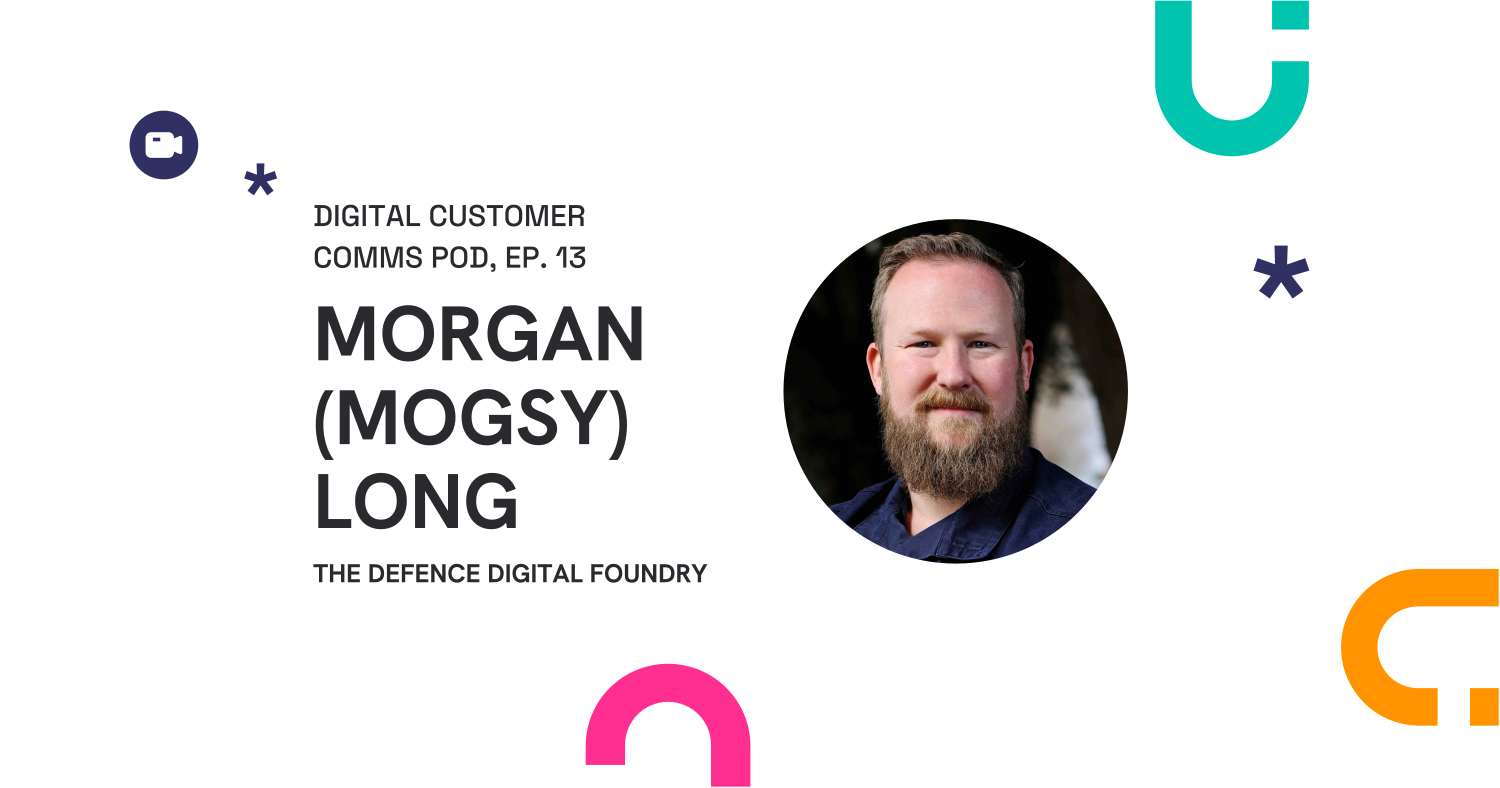
In Regulated Digital Episode 13, Morgan (Mogsy) Long, Programme Manager and Talent Lead at Defence Digital Foundry, explains how a government innovation hub tests ideas at pace while keeping controls credible.
Regulated businesses often focus on customer outreach. The armed forces face a parallel challenge: how personnel and families move through recruitment, service, administration, and retirement without hitting a new system at every step.
The Foundry exists to balance security and compliance with faster delivery across the technology that supports multiple defence problem sets.
Defence Digital Foundry (DDF) acts as a hub for rapid software development, reusable platform delivery, emerging technology adoption, and user-centred solutions.
Defence Digital covers many areas - from satellite systems to issuing headsets. The Foundry’s job is to cut through red tape so new ideas can be tested, refined, and deployed quickly, alongside backbone platforms that enable reuse and standardisation into the future.
“We focus on delivering secure, modern tools at pace. This includes user research, agile sprints, and a strong DevSecOps model.”
Morgan Long, Programme Manager and Talent Lead, Defence Digital Foundry
A team-of-teams model brings in the right specialists when needed - whether they are AI engineers, data analysts, or user experience designers.
That only works if experimentation is repeatable. Each new tool should build on shared platforms instead of starting from a blank page or waiting on a fresh procurement cycle every time a new problem appears.
Compliance Without Late-Stage Gridlock
Defence carries heavy process and approval layers, much like banking, legal services, and insurance.
Where Regulated Sectors Overlap
The same friction points show up in other highly regulated environments:
Compliance at scale: A solution must meet strict security standards, much like GDPR or financial regulations.
Legacy systems: Older platforms can clash with new applications and slow delivery.
Red tape and approvals: Traditional sign-offs can slow innovation if not managed well.
The DDF works faster by giving teams day-to-day decision authority and keeping security and compliance specialists involved from the start, not at the end gate.
Slow sign-offs often come from late involvement, not from the control itself.
The 2023 Haythornthwaite Review makes the same point for personnel policy: the armed forces need more flexible processes and support models if they are to modernise at the pace the environment demands.
User-Centred Delivery in Hierarchical Cultures
Trust is a practical requirement for how the Foundry runs its teams, especially where hierarchy can create a “HIPPO” culture (highest-paid person’s opinion).
The Foundry pushes back with open dialogue, discovery phases, prototypes, and rapid feedback so the user stays at the heart of development.
“If you don’t understand the real people using the software - whether they’re recruits, medics in training, or staff handling administration - you risk building the wrong solution.”
Morgan Long, Programme Manager and Talent Lead, Defence Digital Foundry
The 2023 Defence Command Paper also places advanced technology at the centre of operational effectiveness, which raises the bar for services that personnel will actually use day to day.
Recruit to Veteran: One Connected Experience
Under the MyDefence programme, the aim is a single, consumer-grade experience across a Ministry of Defence career - from the day someone applies until retirement.
If someone installs an app to learn about joining, the same interface could later cover pay, career moves, uniform ordering, accommodation booking, or family support.
“You shouldn’t have to switch systems or start afresh with new logins every time you move departments or change roles.”
Morgan Long, Programme Manager and Talent Lead, Defence Digital Foundry
Progress is incremental. Multiple branches are adopting consistent design systems and shared data platforms so the journey feels connected even when delivery is still uneven.
What Regulated Teams Can Borrow From Defence Digital
Prioritise user feedback: Speak to the people who’ll use the product or service. Build quick prototypes, test them, and adapt based on actual user behaviour.
Embrace agile principles: Break large projects into smaller sprints. Agile methods can still work under strict compliance if you involve security and legal teams early.
Build shared digital foundations: Invest in core building blocks - such as secure authentication layers or shared data platforms - so you don’t reinvent the wheel each time.
Keep voices in the room: Open communication helps avoid the “HIPPO” effect where only senior leaders’ ideas prevail.
Approval cycles, legacy systems, and user expectations in banking, legal, and insurance are often closer to defence than they first appear.
“In defence and financial services alike, delivery speed usually breaks down when security and compliance reviews start too late. Teams that pull those specialists into the first sprint - not the last gate - are the ones that can test ideas without rebuilding the case from scratch every time.”
Paul Holland, Founder and CEO, Beyond Encryption (Mailock)
The same discipline applies when teams start testing AI-assisted workflows or new analytics layers on top of existing customer channels.
AI Pilots, Platforms, and Measured Adoption
AI-driven analytics and automation are the next wave of focus, but adoption stays cautious.
Examples already in motion include coding-assistance pilots comparable to Microsoft Copilot, drone swarms feeding central analytics platforms, and predictive tools that surface information before a user has to search for it.
“Reusable platforms matter because every new pilot should inherit authentication, logging, and security controls by default. Without that backbone, regulated teams spend months rebuilding the same compliance case for each experiment.”
Pilots only scale when the underlying platform already carries the controls regulators expect to see.
What The White Paper Signals
The pro-innovation AI regulation framework favours testing in real environments with clear guardrails, which matches how defence teams evaluate Copilot-style tools and analytics pilots before wider rollout.
Culture change and data security remain the limiting factors. Clearer evidence from early pilots, not broader promises, will determine how quickly the armed forces and other regulated organisations scale these tools.
For regulated firms, the practical question is whether each new digital touchpoint inherits the same security and identity discipline from the start.
Choosing The Right Customer Channel?
Read our research on portals, logins, email, and post before deciding how customers should receive important documents.
How Does Defence Digital Foundry Accelerate Innovation?
It uses a team-of-teams model that brings the right experts together quickly, with some projects deployed and tested in weeks rather than months.
Why Is User-Centred Design So Important?
If you don’t understand end-user needs, you risk creating a product or service that won’t be adopted. User feedback helps teams refine and improve solutions rapidly.
What Is the Role of AI in Defence Digital?
AI offers data-driven insights and automation that can free up personnel for more complex tasks, especially in analytics, logistics, and predictive maintenance.
Can These Lessons Apply to Other Regulated Sectors?
Yes. Banking, legal, and insurance sectors face similar compliance hurdles, and agile methods, strong security layers, and real user input can improve outcomes.
References
Morgan (Mogsy) Long, Programme Manager and Talent Lead, Defence Digital Foundry
Sam Kendall works on digital marketing at Beyond Encryption, helping build B2B marketing activity around research, first principles, and sustainable growth. He writes about marketing effectiveness, positioning, customer communications, and digital culture, with longer-form work published at ATNL.
 Sam Kendall


.svg)
 Previous post