Personalisation in financial services customer communications depends on data quality, regulatory context, and channels that meet customers where they already are.
Firms that standardise data and design for relevance can turn compliance programmes into stronger, clearer customer engagement.
Financial services have long treated customer communications as static, batch-led, and difficult to change. That is shifting as firms use enriched data, video, and interactive tools to deliver messages that feel timely and relevant.
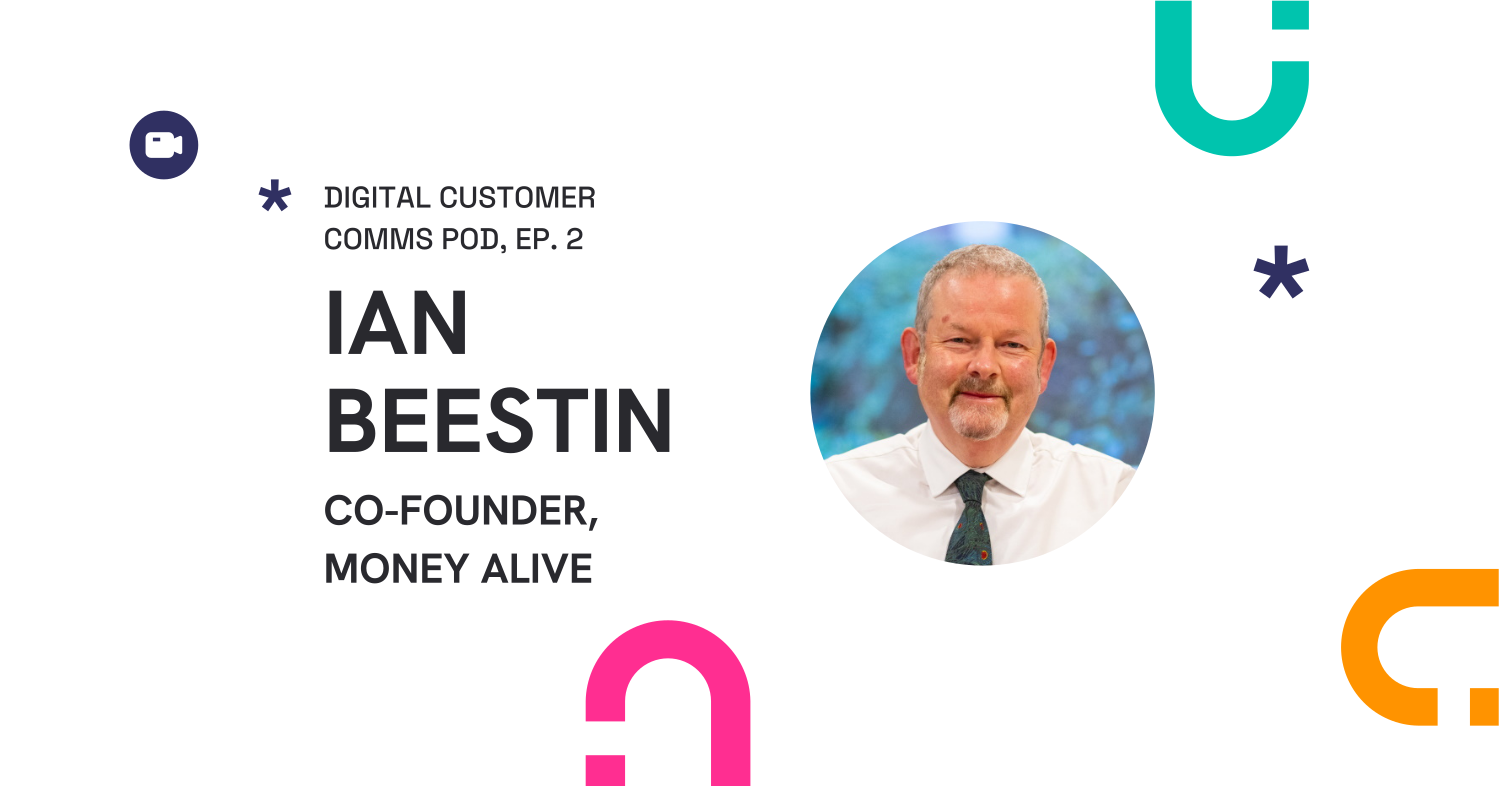
Ian Beestin, Co-Founder of Money Alive, builds video engagement tools for regulated firms. On Episode 2 of Regulated Digital, he explains how personalisation moves customer communications from static documents to dynamic, data-led experiences.
Personalisation programmes in financial services sit at the intersection of data readiness, Consumer Duty expectations, and practical delivery choices. The sections below set out where data quality matters, how regulation can catalyse change, and what interactive communications look like in practice.
The Power of Personalisation in Financial Services
Financial services have traditionally been seen as slow to adapt to new technologies, hampered by regulatory complexities.
However, the landscape is changing rapidly, driven by the necessity to meet customers where they are, both digitally and contextually.
A positive regulatory environment is encouraging companies to enrich their data and use it to improve digital customer communications.
"Personalisation is about leveraging data not just to understand your customers, but to communicate with them in ways that are relevant, timely, and actionable."
Personalisation can boost customer satisfaction and help organisations meet Consumer Duty expectations that consumers fully understand the services they receive.
Open banking initiatives also enable third-party providers to access banking data for enrichment, offering relevant services to consumers.
The growing trend towards leveraging customer data for personalisation is further supported by the rise of Customer Data Platforms (CDPs) - systems that consolidate data from various sources to create unified customer profiles for effective communication.
The personalisation of customer communications is part of a larger shift towards digital services and customer experiences.
Data: The Foundation of Effective Personalisation
At the heart of any personalisation strategy is high-quality data.
As financial services firms prepare for initiatives like the pensions dashboard - a government-led project designed to provide individuals with online access to their various pension savings - there has never been a better time to get their data in shape.
"The pensions dashboard will be a transformative tool, not just in consolidating disparate data but in how it enables companies to innovate around that data."
Advancements in digital customer communications often hinge on companies having their data standardised and organised - a necessity for the pensions dashboard programme.
Data Readiness For Personalisation
High-quality, standardised data is essential for effective personalisation in financial services - particularly where firms need consistent messaging across pensions, banking, and advice journeys.
The data requirements imposed by industry programmes like the pensions dashboard can bring companies closer to new innovations in more personalised, more dynamic customer communications.
As they consolidate their data, companies can create the capacity to streamline their communications, ensuring they deliver the right message at the right time to engage customers more effectively.
The influence of AI in this transformation cannot be overstated. A significant 89% of executives believe that AI-driven digital transformation will be the key driver of revenue growth for their organisations.
Overcoming Internal Challenges
Despite the clear benefits, companies often face challenges when adopting personalised communication technologies.
Vested interests, legacy systems, and concerns about disruption can stall progress on digital transformation initiatives.
Overcoming these barriers requires a committed focus on innovation, starting with leaders dedicating time and resources to explore and understand the potential for transformation.
"Setting aside time for innovation is crucial. This might mean reserving a day to step back from business as usual and focus on how things can be done differently."
By prioritising innovation, leaders can be better prepared to navigate the risks and complexities of new technologies.
Making Room For Innovation
Block dedicated time away from business-as-usual delivery.
Start with one communication journey where data and consent are already clearer.
Measure whether a pilot reduces support queries or improves completion rates before scaling.
The external pressure of requirements such as the pensions dashboard can help leaders to rally change around innovation.
However, the pursuit of new technologies for more personalised communications needs a considered, diligent, and focused approach to avoid organisational disruption.
The Role of Regulation in Driving Innovation
Regulatory frameworks play a critical role in enabling companies to innovate the customer experience.
"A supportive regulatory framework can actually drive companies to adopt more effective communication strategies."
The Financial Conduct Authority (FCA) sets out guidance that organisations must rally around, using new technologies to deliver the best outcomes for customers.
Successful champions of digital solutions are using compliance requirements as a catalyst to rethink their data strategies, unlocking new opportunities for personalisation.
Sending Important Documents At Scale?
Learn how Mailock Automated helps organisations protect high-volume customer communications without forcing every recipient through a portal.
For instance, many organisations are leveraging the requirements set by Consumer Duty - particularly the mandate to make sure customers fully understand the services they receive - to revamp their communication strategies.
By reworking their data collection and processing methods, these organisations are gaining deeper customer insights, enabling them to deliver more tailored and effective communications that resonate with individual needs.
"Consumer Duty pushes firms to explain products clearly, but the same data work also creates the foundation for communications that feel relevant rather than generic."
That dual benefit - clearer explanations and better use of customer data - is where many personalisation programmes start in regulated firms.
What The Research Shows
According to Finextra, personalisation and AI are central to how financial services firms plan to close the gap with consumer expectations in 2024.
Of course, cybersecurity remains a top priority in regulation, with financial institutions increasingly investing in advanced security measures to protect customer data and maintain trust.
Practical Applications of Personalised Communications
Several practical examples illustrate how personalised communications can be implemented in financial services.
From video annual benefit statements that guide customers through their pensions to interactive experiences that help users make informed decisions, the possibilities are vast.
"Interactive tools, like our video canvases, not only present information clearly but also engage customers in a way that static PDFs never could. This not only enhances understanding but also drives the desired actions, whether it's completing a form or updating personal details."
The use of AI-powered virtual assistants and chatbots is enhancing customer service, focusing on increasing personalised recommendations and improving customer interactions.
In addition to AI and video canvases, other tools like personalised email campaigns, dynamic web content, and mobile apps are becoming crucial in delivering tailored experiences.
Interactive tools engage customers more effectively than static PDFs, driving action and understanding.
These tools are essential in creating a more dynamic and responsive customer communication environment.
Looking Ahead: The Future of Personalised Financial Services
As the financial services industry continues to evolve, the importance of personalisation in customer communications will only grow.
"The ability to deliver personalised, actionable insights will become a key differentiator for financial services companies. Those that embrace this shift will not only meet regulatory demands but also build stronger, more trusted relationships with their customers."
There is a clear shift towards customer-centric strategies that prioritise personalised, channel-appropriate experiences.
This highlights the ongoing evolution of financial services towards more secure and efficient processes.
By focusing on the quality of data, dedicating time to innovation, and leveraging a supportive regulatory environment, financial services firms can create communication strategies that are both compliant and deeply resonant with their customers.
The future of customer communications in this sector is about leading the charge in delivering genuinely personalised experiences - with data, consent, and clarity built in from the start.
FAQs
What Does Personalisation Need Before Technology?
It needs reliable data, clear consent, internal alignment, and a specific purpose for the customer.
Why Can Personalisation Be Difficult in Financial Services?
Regulation, legacy systems, team silos, and data quality can slow delivery.
How Can Firms Use Personalisation Responsibly?
Focus on helpful timing, relevant content, and transparent use of customer data.
Sam Kendall works on digital marketing at Beyond Encryption, helping build B2B marketing activity around research, first principles, and sustainable growth. He writes about marketing effectiveness, positioning, customer communications, and digital culture, with longer-form work published at ATNL.
 Sam Kendall


.svg)
 Previous post