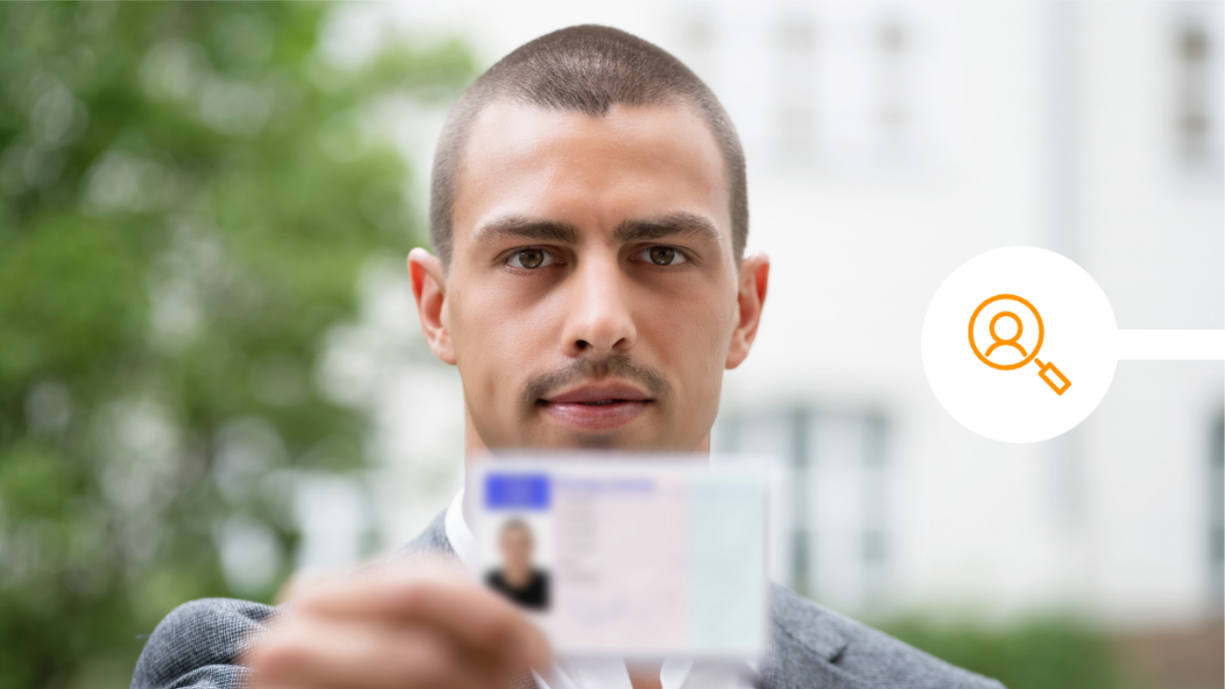
What To Do About Digital ID in the UK: Do We Need It?
 Paul Holland


It sounds Orwellian - but beneath the headlines, digital identity raises a question worth asking: could it protect us as much as it profiles us?
It divides opinion. For some, it signals mass surveillance and state control - for others, an overdue fix for outdated ways of proving who we are.
Both instincts are valid. What counts is how digital identity is built, and who it really serves.
Let's look at what digital identity means, the latest on the UK’s plans, and what a practical, trustworthy model could look like here.
How We Got Here
The Road to Digital ID
Britain’s relationship with identity schemes has always been uneasy. Post-war ID cards were scrapped in 1952.
A national ID proposal in the 2000s was later repealed amid privacy concerns. Each time, trust proved the obstacle.
But the status quo isn’t working well either.
When we start a job, rent a flat, or open an account, we hand over the same documents again and again - passports, driving licences, utility bills or other proof of address documents - a system that adds friction, fuels fraud, and excludes people without traditional identification.
In fact, verification underpins most civic interactions. But without consistent standards, confidence has to be earned afresh each time.

Latest: The UK Government’s Plan
Ministers have announced a national scheme with digital ID intended to enable Right to Work checks by the end of the Parliament.
An official explainer says it should make key public services easier to use.
During a visit to Mumbai, the Prime Minister praised India’s system as a “massive success,” while stressing the UK would focus more on inclusion. He also called digital ID an “enormous opportunity.”
What The Data Shows
India’s ID system, Aadhaar, is the world’s largest biometric identity programme.
Potential uses have been floated for school applications, mortgages and licensing, although these remain subject to consultation and legislation.
Despite the potential benefits, critics have been vocal. Civil liberties groups have warned of a “checkpoint society,” and Guardian polling coverage highlights public scepticism and political pushback.
The UK’s Current Approach
Trust Framework, Explained Simply
The UK has chosen a federated model for digital identity.
Multiple certified providers can verify users using common standards, rather than relying on a single centralised database.
| Term | Meaning |
|---|---|
| Federated | Multiple certified providers can verify you, but all must meet the same standards. |
| Attribute | A single fact about you - for example, “over 18” or “UK resident.” |
Those standards live in the Trust Framework, which reached its “gamma (0.4)” version in June 2025. (Later supplementary codes cover employment, renting and DBS checks.)
From summer 2025, providers have been able to apply for certification to show that their identity services meet government-approved standards.
The Data (Use and Access) Act 2025 sets out oversight powers, and the Office for Digital Identities and Attributes (OfDIA) - a new regulator under the Department for Science, Innovation and Technology - will certify providers, audit compliance, and enforce privacy standards.
Over time, these standards are expected to work with GOV.UK One Login. That would give citizens a single sign-in for government services and, with consent, the option to work alongside private-sector checks.
.jpg?width=500&height=281&name=Untitled%20design%20(2).jpg)
This approach revives an ambition first attempted through GOV.UK Verify, which was launched for similar purposes but struggled to gain adoption.
Lessons from that earlier programme - particularly around usability and onboarding - seem to be shaping today’s more integrated model.
The government actively encouraged private-sector innovation at points during the development of the current model - spurring companies such as Yoti and others to develop verification capability under the promise of an open and industry-led ecosystem.
However, as the state took on more of the delivery itself, uncertainty has grown about the balance between public and private provision.
Why Digital ID Might Help - And Why It Might Not
Reducing Fraud and Friction
Fraud and computer misuse remain among the UK’s most common crimes.
Stronger identity verification could reduce impersonation, account takeover and the threat posed by AI-generated “synthetic identities” - fake profiles built from fragments of real data.
What The Data Shows
As of 2024, there were an estimated 2.8 million high-risk synthetic identities already in circulation in the UK.
It could also mean less personal data is risked during ID processes; we don’t always need a whole document - we need the information inside it.
Sharing just what’s needed - a renewal date, a balance, or an “over-18” proof - can keep data exposure to a minimum.
A better system could also alleviate the friction caused by physical identity checks. This could speed up job onboarding, accelerate rental checks and simplify Disclosure and Barring Service (DBS) verification.
It could also reduce the need to juggle multiple logins for services like GP appointments or benefits.
Of course, any benefits depend on privacy, consent and transparency being built in from the start.
The big question is whether we can gain efficiency without compromising trust - or leaving people out.
Improving Inclusion and Access
Millions of people lack passports or driving licences. That becomes a real barrier when they need to prove their identity, address or citizenship.

A digital credential, backed by assisted and offline routes, can make access fairer. Belgium’s itsme and Singapore’s Singpass have shown inclusion rises when it is prioritised by design.
And design choices matter:
- Personal data vaults keep information in the user’s hands.
- Paper-to-digital bridges let people digitise existing documents.
- Clear activity logs show who accessed what, when and why.
Together, features like these can help people see what is shared, spot misuse, and stay in control.
Support for carers, advisers and those verifying on someone else’s behalf must also be first-class if this trust is to be universal.
Lessons From Abroad
What Worked - and What Didn’t
| Country | What Worked | What Didn’t | Takeaway |
|---|---|---|---|
| Estonia | Universal use across services; fast, secure access. | Requires high digital literacy and sustained cyber investment. | Efficiency is possible when resilience is prioritised. |
| India | Faster delivery of benefits and subsidies. | Biometric failures and data leaks caused exclusion. | Scale must not outpace safeguards. |
| Belgium | Simple app; mass adoption via bank partnerships. | Limited portability beyond national systems. | Partnerships help adoption but risk lock-in. |
| EU (eIDAS 2.0) | Cross-border wallets with interoperability mandates. | Complex governance and alignment. | Shared rules can build cross-border trust. |
The Legitimate Concerns
Why People Don’t Trust Tech - and What to Do About It
Mistrust isn’t abstract. People have seen data sold, leaked, and systems built for convenience can slide into surveillance when boundaries blur.
The ICO is clear that “data protection by design and default” isn’t optional. Any ID platform will need to collect the minimum, limit reuse and give people a meaningful right to refuse.
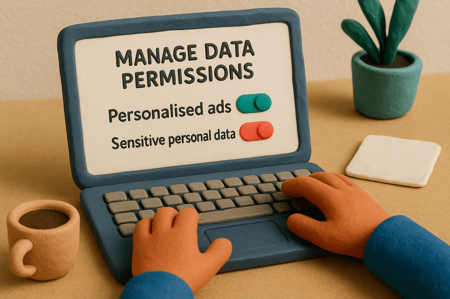
There is also a wider and more elusive cultural trust problem with tech.
People have lived through dark-pattern consent prompts, data monetisation and major platform breaches.
If a UK digital ID ends up feeling like another Big Tech product, it will fail on arrival. We need rigid and clear lines against monetisation, strict purpose limitation, separation from advertising systems and open reporting on who accessed what and why.
To enable trust, policymakers and providers will also need to consider:
- Making opt-in the default for all data sharing
- Publishing plain, accessible data maps
- Showing access logs so users can see when and why data is viewed
- Mandating independent security and ethics audits
- Limiting data retention by default
- Providing a clear appeals route when automated checks fail
Trusted networks of prior, verified interactions can also act as privacy-preserving signals, reducing the need to share raw ID data.
Dynamic Authentication, Not Static Hurdles
As services scale, authentication should be dynamic.
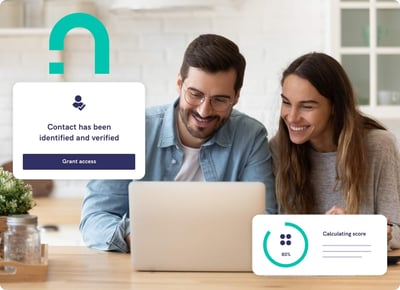
Low-risk actions rely on lightweight, privacy-preserving checks, while higher-risk moments trigger step-up verification (for example, re-confirming with a passcode or a fresh ‘liveness’ selfie check).
This risk-based approach protects people without forcing everyone through the most intrusive process every time. It also aligns with data minimisation and reduces barriers for people with limited tech access.
"Risk-based authentication only earns trust when the step-up path is proportionate, logged, and easy to challenge when it goes wrong."
Michael Wakefield, CTO, Beyond Encryption (Mailock)
That proportionate check is the practical test for any national programme that wants to win public confidence.
What Will Decide Success
Clarity, Choice, and Credible Alternatives
In practice, three questions separate systems we welcome from systems we resist.
First, do we know exactly what is being shared, with whom and why, in plain English?
Second, can we say “no” without being excluded, with credible assisted and offline alternatives?
Third, can we see and revoke what we have shared, with an audit trail that is easy to understand?
When citizens’ interests come before market priorities, trust has room to grow naturally without political intervention.
What Good Looks Like
Digital ID earns legitimacy when protection feels effortless and participation fair. A trusted framework should:
- deliver consent-first journeys with clear, revocable permission.
- use personal data vaults that keep information under the individual’s control rather than centralised by default.
- offer inclusive design with assisted and paper-to-digital routes for those without easy online access.
- provide transparent activity logs so users can see who accessed what, when and why.
- keep a human in the loop for critical or disputed decisions.
- commit to continuous testing with public reporting so security and privacy are treated as ongoing civic duties rather than tick-box compliance exercises.
Meet those criteria and digital identity will have a fighting chance to take the UK forward in a positive way.
Building Digital Confidence
Digital ID is a governance challenge before it is a technology choice.
Technology can verify who we are; only transparent design, consent and oversight can make that verification trustworthy.
Tools that help people organise records, manage consent and share information safely with trusted helpers - without surrendering privacy - point to an ethical path forward.
"Technology can prove who you are - only trust can make that meaningful."
Paul Holland, Founder and CEO, Beyond Encryption (Mailock)
If you are reviewing identity checks in your own organisation, start with consent, logging, and a clear route to challenge automated decisions.
FAQs
What Is “Federated” Identity?
Multiple certified providers can verify you using common rules.
There is no single mega-database. Instead, services interoperate through a Trust Framework.
Will Biometrics Be Used in the UK?
It is not confirmed. Ministers praised India’s model while signalling the UK would differ and focus on inclusion.
Final policy will depend on consultations and the Data (Use and Access) Act 2025.
Is This Mandatory?
Ministers have signalled an intention to enable Right to Work checks via digital ID by the end of the Parliament, subject to consultation and delivery readiness.
Uses beyond that have been proposed but are not yet final.
What Do Civil Liberties Groups Say?
They warn about mission creep, surveillance and exclusion risks. See responses from Big Brother Watch.
Media coverage has also flagged falling public support.
What Can the UK Learn from Others?
Estonia shows convenience at scale when security and design are robust.
Belgium and Singapore demonstrate that uptake rises when benefits are immediate.
India shows how biometric errors and weak safeguards can exclude people, so strong controls and redress are vital.
References
Digital Identity Guidance, UK Government, 2024
New Digital ID Scheme to Be Rolled Out Across UK, UK Government, 2025
Digital ID Scheme: Explainer, UK Government, 2025
Using Your GOV.UK One Login, UK Government, 2023-present
UK to Learn From India’s Digital ID, Financial Times, 2025
Starmer Hails ‘Enormous Opportunity’ in Digital ID, The Guardian, 2025
Polling Shows Falling Public Support for Digital ID, The Guardian, 2025
Big Brother Watch Responses on Digital ID, Big Brother Watch, 2025
Crime in England and Wales: Year Ending December 2024, Office for National Statistics, 2025
UK Digital Identity & Attributes Trust Framework (Gamma 0.4), UK Government, 2025
Sharing the Final Gamma (0.4) Framework and Updated Supplementary Codes, OfDIA Blog, 2025
Going to Gamma: Uplifting Your Existing Certification, OfDIA Blog, 2025
UK Digital Identity Legislation Passes Another Important Milestone, OfDIA Blog, 2025
Data (Use and Access) Act 2025, UK Parliament, 2025
About Singpass, GovTech Singapore, 2021-present
Steps Forward for Belgium & Estonia Digital IDs, Biometric Update, 2024
Itsme Usage and Adoption, The Brussels Times, 2025
European Digital Identity (eID): Council Adopts Legal Framework, Council of the EU, 2024
Aadhaar Biometric Verification Failures Under Scrutiny, Biometric Update, 2025
Reviewed By
Sam Kendall, 02.06.26
This content is for general information only and is not legal advice.
|
Originally posted on 28 10 25
Paul, CEO and Founder of Beyond Encryption, is an expert in digital identity, fintech, cybersecurity, and business. He developed Webline, a leading UK comparison engine, and now drives Mailock, Nigel, and AssureScore to help regulated businesses secure customer data. |
Email Series
Subscribe to
.svg)
Subscribe to Privacy Decoded, our monthly email briefing about privacy, digital trust, and the forces shaping our online world.
 Previous post